Ubuntu vs Windows XP
Windows' comparison to Ubuntu depends on which version of Windows you compare. There have been several broad versions of Windows, each of which have their own niche versions.
Versions of Windows XP
- XP Home
- XP Professional
- XP 64-bit Edition
- XP Professional x64 Edition
- XP Media Center Edition
- XP Tablet PC Edition
- XP Embedded
- Fundamentals for Legacy PCs
Of these the three most commonly encountered are XP Home, XP Professional, and XP Media Center Edition.
There are two spin-off versions that were sold in specific parts of the world. XP Starter Edition was sold in Russia and select parts of South America and Asia; it runs on lower-end hardware and is reported to offer similar functionality to XP Home.
After being convicted of monopoly tactics and anti-competitive behaviour in the European Union, Microsoft was forced to offer a version of XP that did not include the Windows Media Player. This was known as Windows XP Edition N (for No Media Player).
Versions of Ubuntu
Unlike Microsoft, Ubuntu does not differentiate between its home and professional editions. The version homemakers use for recipe collection or children use for games is the same version used by programmers in large businesses like Google. The focus of professional or enterprise editions - security and stability - is equally available to the non-professional user.
Beyond Ubuntu, there are a few specialist packages. Edubuntu is specifically oriented toward schools and teaching. It includes educational games for children as young as three. But it also includes key applications for students in higher levels, including high school or college. At its core, however, it remains the same as regular Ubuntu.
In addition to these, two other editions of Ubuntu are available for different graphic interfaces and pre-packaged programs. Kubuntu is oriented to those who prefer to use the KDE graphic interface instead of Ubuntu's default, GNOME. Xubuntu is for those who prefer the xfce graphic interface.
Unlike Windows, Ubuntu does not need to be trimmed down to be embedded or to work on a tablet PC. It is already small enough and fast enough for that. Also, Linux is already embedded in PDAs and cell phones without major revisions.
Also unlike Windows, Ubuntu - and Linux in general - is very robust. It can run on relatively old computers. Therefore, there is no need for a legacy edition. But it can also run on full media centers without needing a new version of the operating system.
Functionality
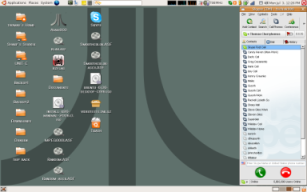
More advanced users also benefitted from fast user switching, remote desktop capabilities, and ACPI power management that supports hibernation and sleep mode. Anything beyond this basic functionality requires the purchase of additional software. Unfortunately, XP users also have to endure incompatabilities between XP and some third-party software.
Ubuntu, on the other hand, comes with high quality, industrial-strength applications on the installation CD. These include a full office suite, a graphics package that has around 80% of the functionality of Adobe Photoshop, a full personal information manager that functions similarly to Outlook, instant messaging, and Skype-like Internet phoning.
Using Ubuntu's built-in installation utility, one can select applications which the program will then find on the Internet, download, install, and configure at the click of a button. Ubuntu also supports fast user switching as well as nested user switching, allowing you to start another login inside of a nested window like starting another program. ACPI power management is also supported.
One of the great frustrations endured for some time by Linux users and Windows users alike was incompatability issues between the software and the operating system. Ubuntu solves this by checking the dependencies of a program before it is installed. If a required package is not installed and needs to be, Ubuntu will offer to find it and install it first, and then continue installing the previously selected program.
Cost
While Ubuntu offers significantly more functionality immediately upon installation than Windows does, the starkest point of comparison is price. As I write this, the entry-level Windows XP Home Edition retails for $89.99 (USD). The Media Center Edition sells for $139.95 (USD). Ubuntu, on the other hand, remains free of charge. You can download it or even request a free installation CD, sent to you wherever you live for free (no charge for the postage, even!).
***y-ubuntu-comparisons.shtmlThe Linux kernel is the basic programming foundation for the entire Ubuntu operating system. Here is how it started and why it is called GNU/Linux.
Ubuntu comes from an African word that suggests humanity and community.
Ubuntu compares well against any operating system in use today, including Windows, Mac, and other Linux versions.
Ubuntu can be downloaded or ordered and is available in a couple of versions: 6.06 (Dapper Drake) and 7.04 (Feisty Fawn). Which you use depends on the software you need. This page shows you from where you can download, request, or buy Ubuntu.
Ubuntu had many Windows Vista features almost a year before Microsoft released it. Here is how Ubuntu compares to Windows Vista.
Windows Vista looks curiously like Mac OS X. NY Times' David Pogue says there is no connection.
Ubuntu is the easiest Linux version to install. Here is a guide to installing Ubuntu Linux painlessly.
Ubuntu Linux checks for updates by default. If you need to update your installation of Ubuntu for the first time, here is how to do it.
Resizing a Windows installation is easy with the Ubuntu installer. Installing Ubuntu in parallel to a Windows installation is called 'dual booting' and is a good idea. Here is how to do it.
Ubuntu's history started with Debian GNU/Linux but has since outgrown it. Here is a brief look at Ubuntu's past and how things stand today.
Adding Ubuntu software, non-Ubuntu Linux software, or even proprietary software to your new installation is easy with Synaptic. Here's how.
Adding Ubuntu repositories to download more Linux software is not very complicated. It is a simple matter of telling Ubuntu where to find more software.
Ubuntu software is available in more repositories than the default Ubuntu installation gives you. Here is a listing of more Ubuntu repositories for your software needs.
Ubuntu Feisty was released in April 2007. It is the easiest Ubuntu to install yet. Here is how the installation of Ubuntu Feisty is different from 6.06 LTS.
Dual booting Ubuntu with Windows XP, Windows Vista, or another Operating system is a straightforward matter once you know how to do it. Here we discuss what dual booting is and what it offers the user of Ubuntu Linux.
Grub boots Ubuntu by default. But if you want to make Windows your default operating system without losing Ubuntu, all you need do is change a number in Grub's configuration file. Here is how.
Grub's menu is hidden by default. Making it visible at startup is a matter of editing grub's configuration file. Here is how.
Dual booting Ubuntu with Windows or another operating system is not particularly difficult. This guide shows you how to dual boot Ubuntu and Windows.
Grub's menu is hidden by default. Making it visible at startup is a matter of editing grub's configuration file. Here is how.
Ubuntu uses GNOME as a default desktop. Here are the top left parts of the Ubuntu desktop and what each does.
Ubuntu uses GNOME as a default desktop. Here are the top right parts of the Ubuntu desktop and what each does.
Ubuntu uses GNOME as a default desktop. Here are the bottom parts of the Ubuntu desktop and what each does.
Installing Ubuntu should be as easy as possible, and the best guides for this are provided here at Easy Ubuntu Linux. But all the online resources in the world do not help you offline. For this reason, we are providing this PDF primer to help you install Ubuntu.
Sending e-mail under Linux is easy. Here is how to setup your email identity under Ubuntu Linux.
Sending e-mail under Linux is easy. Here is how to receive email under Ubuntu Linux.
Sending e-mail under Linux is simple. Here is how to setup Evolution to send email under Ubuntu Linux.
Choosing an office suite for your Ubuntu installation is like choosing the first among equals. Here is a comparison of the best office suites available for Ubuntu Linux.
Ubuntu upgrades are easy to affect. As usual with Ubuntu, you get to choose how to upgrade.
Ubuntu Upgrades are a choice of two straightforward processes. Here is how to upgrade and update all of your programs at once.
Ubuntu Upgrades are as easy as the installation. Here is how to upgrade and save your data.
Sending e-mail under Linux is easy. Here is how to receive email under Ubuntu Linux.
Ubuntu's image handling surpasses those of other operating systems. Whether you just need to look at your pictures or create first-rate graphics, Ubuntu offers a program to meet your needs.
Ubuntu comes with the GIMP already installed. Here is a brief tutorial on how to edit photos with the GIMP.
GQView is an additional photo previewing program for Ubuntu. Here is a brief tutorial on how to preview and edit photos with GQView on Ubuntu.
Install Ubuntu with minimal fuss. Some choices in the installation process are better than others, and this section will help you to install Ubuntu with ease.
The default Ubuntu configuration is good for most users. However, you will inevitably want to configure Ubuntu to suit your tastes better.
Once Ubuntu is setup, you may still wonder about how to use Ubuntu. This section will show you how to setup and use software such as email, office suites, and photo editing software.
Apache is the main Ubuntu web server. It allows you to serve web pages from your computer. Here is how to use Ubuntu to serve web pages with Apache.
Apache is the default web server on your Ubuntu system. With Ubuntu's Apache modules, you can enable Apache to do a lot more than serve web pages. Here is how to configure Apache modules on Ubuntu.
Apache lets you serve web pages from your Ubuntu server. Which of Ubuntu's Apache modules are installed determines what you can do with your web server. Here is how to configure Apache modules on Ubuntu.
Apache is a web server available for Ubuntu. With it you can serve web pages from a computer. Here is how to setup Apache as a web server on Ubuntu.
Apache on Ubuntu is a web server that enables you to serve web pages. How well those web pages are served depends on the configuration you use. Here is detailed information on the default configuration of the Apache web server on Ubuntu.
MySQL is the most common database server in the world. Here is how to install MySQL on Ubuntu Linux.
MySQL is the world's most common database server. Here is how simple configuring MySQL can be on Ubuntu Linux.
MySQL is the most common database server. Here is the basic MySQL configuration in detail.
PHP is one of the main languages used in developing for the Web. It allows you to create web pages dynamically on Ubuntu.
PHP is a programming language used with the Apache web server. Configuring PHP well allows you to serve web pages dynamically on Ubuntu.
PHP is one of the main languages used in developing for the Web. Here is an in-depth look at configuring it on on Ubuntu.
PHP is one of the web's main languages for development. Understanding how to configure PHP allows you to create web pages dynamically on Apache.
Ubuntu is not always easy. But Easy Ubuntu Linux helps make it that way. Keep it easy with the Easy Ubuntu blog.
A LAMP server is one of the most pervasive types of servers on the Internet, but many people find installing LAMP servers difficult. Here is how to install a LAMP server on Ubuntu.
Samba is the main Ubuntu file sharing server. It allows you to share files with others from your computer. Here is how to use Ubuntu to share files with Samba.
Samba is a file sharing server for Ubuntu Linux. It allows filesharing with others from your computer. This guide shows how to configure Samba on Ubuntu.
Samba is a file sharing server for Ubuntu Linux. It allows filesharing with others from your computer. This is the second page of a guide that shows how to configure Samba on Ubuntu.
Samba is a file sharing server for Ubuntu Linux. The [globals] header is part of the Samba configuration file. This guide shows how to configure the [globals] section of the Samba configuration on Ubuntu.
Samba is a file sharing server for Ubuntu Linux. The [homes] header is part of the Samba configuration file. This guide shows how to configure the [homes] section of the Samba configuration on Ubuntu.
Samba also functions as a printer managing server for Ubuntu Linux. The [printers] header is part of the Samba configuration file. This guide shows how to configure the [printers] section of the Samba configuration.
Resizing a Windows installation is easy with the Ubuntu installer. Installing Ubuntu in parallel to a Windows installation is called 'dual booting' and is a good idea. Here is how to do it.
Ubuntu's open source nature allows you to program your computer yourself. Here is an introduction to the ways to do computer programming on Ubuntu.
Functional programming is not hard to do on Ubuntu. Here is an introduction to what functional programming is and why this programming paradigm is widely used.
Object-oriented programming is one of the most powerful programming paradigms and the hardest to control. Here is an introduction to how to use object-oriented programming on Ubuntu..
Learning PHP is not difficult with Ubuntu. This PHP tutorial helps you begin to learn PHP for Ubuntu.
Learning PHP is not difficult with Ubuntu. This PHP tutorial helps you begin to learn PHP for Ubuntu, starting with PHP's keywords.
Wine is an emulation layer for Ubuntu. It allows you to run Windows applications like native Ubuntu software. Here is how to use Wine to run Windows applications on Ubuntu.
To Learn PHP is not difficult with Ubuntu. In this PHP tutorial, we look at variables and datatypes.
To Learn PHP is not difficult with Ubuntu. In this PHP tutorial, we look the importance of PHP's datatypes.
Perl's Credit Card module is an effective way to check card numbers on Ubuntu. Here is how to install the Credit Card module on Ubuntu in the fastest and most painless way possible.
Processing credit cards is a fundamental process when you do ecommerce on Apache. Here we walk through some of the more common options for credit card processing on Ubuntu.
Processing credit cards is a fundamental process when you do ecommerce on Apache. Here we walk through some of the more common options for credit card processing on Ubuntu.
An Ubuntu netbook gives you the facility of a netbook with the advantages of Ubuntu. Here we see the beauty of running an Ubuntu netbook.
A netbook is a very small laptop that has lower specifications than the usual lap top. This makes it perfect for Linux. Here we look at the advantages of a Linux netbook.
A netbook is a very small laptop that has lower specifications than the usual lap top. Here we look at the netbook and the value of running Ubuntu Linux on one.
Learning PHP is not difficult with Ubuntu. This PHP tutorial helps you begin to learn PHP and PHP syntax.
PHP loops are not difficult to learn. It is simply a matter of remembering each formula. This PHP tutorial shows you how PHP loops work on Ubuntu.
To learn PHP is not difficult with Ubuntu. In this PHP tutorial, we look at PHP constants.
To learn PHP is not difficult with Ubuntu. In this PHP tutorial, we look at the value of constants.
To learn PHP is not difficult with Ubuntu. This PHP tutorial shows how to test for defined constants and then to define them if they are not a PHP constant.
To Learn PHP is not difficult with Ubuntu. In this PHP tutorial, we look at the importance of understanding PHP's expressions.
Apache is the main web server provided by web hosting companies. Here are recommendations on which Apache web hosting company to use for your Apache web host.
Linux notebooks are not as rare as they once were. It is nonetheless possible to buy a notebook and find that you cannot install Linux on it. Here is a series of guides for how to install Linux on different notebooks.
We usually learn PHP as a standalone language, but it can be used in a HTML page. Here is how to embed PHP in HTML for dynamic web pages.
To affect PHP hosting requires you to configure Apache to Host PHP. Here we see how to do that.
PCI DSS is one of the most important elements of e-commerce. Even if you run your own credit card processing business, you would be forgiven for wondering 'What is PCI DSS?'. This cryptic abbreviation is explained here.
Sudoers are those users who can gain administrative access to the system. Their names are listed in the sudoers file. Here is how to be so registered if your username is not in the sudoers file.
The PCI DSS requirements cover the salient aspects of data security set by the payment card industry. Here we look at the requirements of the PCI DSS.
The PCI DSS requires network security in the first instance. Here are the two requirements of the PCI DSS that focus on network security.
The PCI DSS requires a secure firewall in the first instance. Here is the PCI checklist for securing your network.
The PCI DSS requires network security down to the system level. Here is what to look for when evaluating your systems for network security according to PCI DSS requirements.
The PCI DSS requirements for network security are not self-explanatory. Here is the PCI checklist for securing your network according to PCI DSS requirements.
The PCI DSS requires protection of credit card data in multiple ways. Here is how to protect credit card data according to PCI DSS requirements.
Credit card data protection is the second set of PCI DSS requirements. This checklist helps you to ensure you are compliant with the PCI DSS requirements on credit card data security.
Credit card data protection is the second major set of PCI DSS requirements. This second component deals with how to protect credit card data in transit according to PCI DSS requirements.
Credit card data protection is the second major set of PCI DSS requirements. This checklist will help you to ensure your are compliant with PCI DSS requirements for credit card data protection.
Sign up for Gmail and get several benefits for free. Here is how to sign up for Gmail for free.
Email solution on Linux vary according to how much control and accessibility you want to have. Here we see what is available for email solutions under Ubuntu Linux.
Install Ubuntu 10.04 (Lucid Lynx) with minimal fuss. Some choices in the installation process are better than others, and this installation guide will help you to install Ubuntu 10.04 (Lucid Lynx) with ease.
OpenOffice Writer is the wordprocessing application of the OpenOffice office suite of productivity applications. Here are the basics of using OpenOffice Writer.
Manuals for all things Linux provided by Easy Ubuntu Linux
To reset password in Ubuntu is used with root access and without. Here is how to reset password in Ubuntu.
To add users in Ubuntu allows for a true multi-user system. Here is how to add user in Ubuntu.
The PCI DSS vulnerability management addresses all forms of malware - viruses, worms, and Trojans. Here are the stipulations of the PCI DSS with regard to management of known vulnerabilities.
This PCI DSS vulnerability management checklist addresses the same kinds of malware that the PCI DSS requires. Here the stipulations of PCI DSS vulnerability management are put in practical terms.
What is Ubuntu?
Subscribe
Installing Ubuntu
Laptops
Configure Ubuntu
Use Ubuntu
Servers
E-Commerce
- Credit Card Processing Choices
- Credit Card Number Validation
- Installing Perl's Credit Card Module
- PCI DSS
- PCI DSS Requirements
- Network Security
- Credit Card Data Handling
Programming
- Programming Paradigms
- Functional Programming
- Object-Oriented Programming
- PHP
- Install PHP
- Learn PHP
- The PHP5 Manual
Emulation
Administer Ubuntu
Reference Manuals
Change a Life
Stay Up-To-Date








Replace the image above, with your own RSS. Alternatively, you can use the


Does your computer make you this happy?

If not, you need Ubuntu

Easy Ubuntu Linux and the Easy Ubuntu Linux logo ©2006-2011, LCS. Ubuntu ©Canonical, Ltd.
All other trademarks and logos are the reserved copyright possessions of their respective owners.
Unless otherwise stated, all material contained on this website is copyrighted to Easy Ubuntu Linux.com.
All rights are reserved. All content is provided AS IS without any warranty of any kind for any purpose.
If you have a question or comment about Ubuntu or this site, please send email to
'webmaster (at) easy-ubuntu-linux.com'
(remove single quotes and replace "@" for " (at) ").